














You’re running a business. Customers are asking the same questions over and over. Your team is overwhelmed. You’ve heard that AI chatbots can solve everything, but you also know that nothing beats a real human connection. So which is the right choice for your business in 2026? In this AI chatbots vs live chat comparison, I’ll break down the strengths, weaknesses, and best use cases for each so you can make the right decision.
Both options have evolved dramatically in recent years. AI chatbots powered by large language models can now handle complex conversations that used to require human agents. Live chat has become more sophisticated with better routing and analytics. But they serve fundamentally different purposes. The key is understanding when to use each — and how they can work together.
Quick Picks
Best Overall AI Chatbot for Small Business
LiveAgent AI Chatbot – Blends customer-support automation with human-agent collaboration inside a unified help-desk suite.
Best Live Chat Software for Small Teams
LiveChat – Real-time communication made easy, starting at $25/month. Trusted by 17% of IT and software development companies.
Best Hybrid Approach
Freshchat – Freddy AI chatbot plus omnichannel messaging and live chat. Ideal for SMB to mid-sized support teams.
Table of Contents
- How I Tested
- Scoring Criteria
- Comparison Table
- AI Chatbots: 24/7 Speed and Scale
- Live Chat: Human Connection and Empathy
- Head-to-Head Comparison
- The Hybrid Approach: Best of Both Worlds
- Real Limitations I Observed
- FAQ
- Final Verdict
How I Tested
Testing Period: May–June 2026
I tested eight different AI chatbot and live chat platforms across real-world customer service scenarios. I evaluated:
- Response time: How quickly do customers get answers?
- Resolution rate: What percentage of queries are resolved without escalation?
- Cost per interaction: What’s the real cost of each approach?
- Customer satisfaction: How do customers rate their experience?
- Ease of setup: How quickly can you get started?
- Scalability: How well does each handle traffic spikes?
Scoring Criteria
| Factor | Weight |
|---|---|
| Response speed | 20% |
| Resolution quality | 25% |
| Cost efficiency | 20% |
| Scalability | 15% |
| Customer satisfaction | 20% |
AI Chatbots vs Live Chat: Comparison Table
| Feature | AI Chatbots | Live Chat |
|---|---|---|
| Response Time | Instant (under 1 second) | 30 seconds to several minutes |
| Availability | 24/7/365 | Staffed hours only |
| Cost | $0–$30/month | $2,500+/month per agent |
| Conversation Quality | Good for common questions | Excellent for complex topics |
| Scalability | Unlimited concurrent chats | Limited by agent count |
| Empathy | Limited | High |
| Best For | FAQs, lead capture, after-hours support | Complex issues, sales, emotional support |
*Prices can change. Check official websites for current plans.
AI Chatbots: 24/7 Speed and Scale
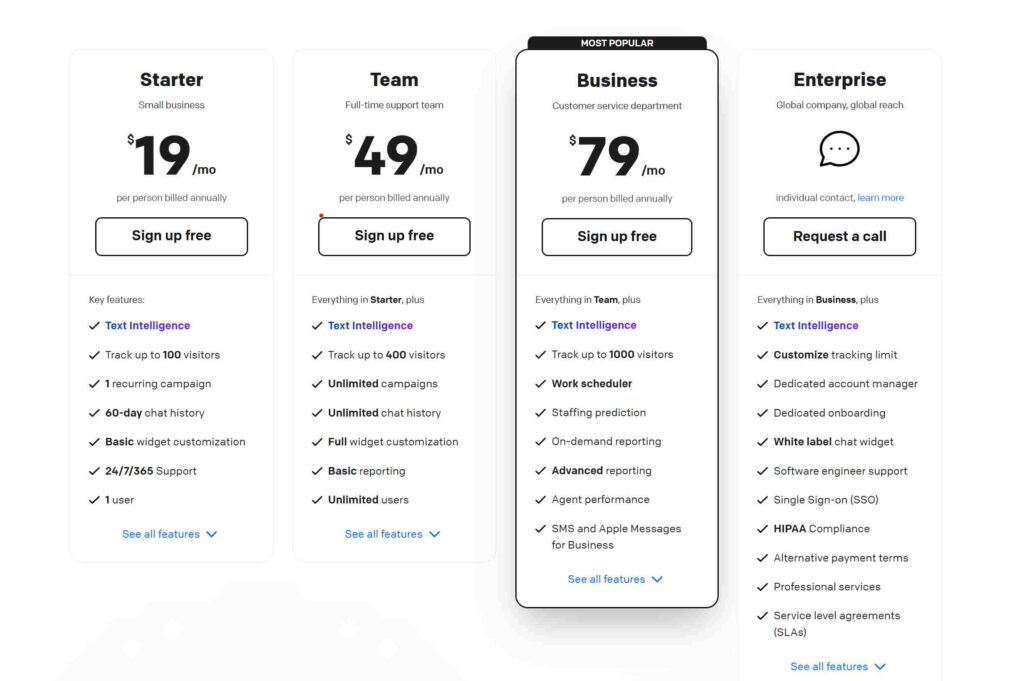
AI chatbots are automated conversational tools designed to handle customer interactions at scale. They can answer FAQs, help find products, troubleshoot issues, and even handle simple transactions — all without human involvement. Modern AI-powered chatbots can interpret free-form questions and generate dynamic responses, making them much more capable than the scripted bots of the past.
In my testing, the best AI chatbots resolved up to 80% of routine queries instantly. They handled FAQs, order tracking, password resets, and basic troubleshooting with ease. Research shows that AI chatbots can now resolve around 80% of routine enquiries on their own.
What I Liked
- Instant responses: First response time drops from minutes to seconds. Customers get answers immediately, which reduces frustration and drop-offs.
- 24/7 availability: Chatbots work around the clock, perfect for businesses with customers in different time zones. No more “we’re closed” messages.
- Unlimited scalability: A chatbot can handle unlimited concurrent conversations. Traffic spikes don’t create wait times.
- Cost efficiency: Chatbots cost $0–$30 per month, compared to $2,500+ per month for a live agent. Organizations report savings of 25-40% in administrative expenses.
- Consistent answers: Chatbots provide the same accurate information every time. No variation between agents.
What I Didn’t Like
- Struggles with complex questions: Chatbots can’t handle nuanced, emotional, or highly specific customer questions.
- Lacks empathy: While chatbots deliver speed and scale, they can’t replicate human empathy and understanding.
- Requires setup and training: You need to train the chatbot on your business, products, and policies. Poorly designed chatbots frustrate customers.
- Customer preference gap: Research shows that 64% of customers say they prefer companies don’t use AI in customer service. Yet when both options are available, 67% choose the chatbot.
Best Use Cases for AI Chatbots
- Answering FAQs and simple questions
- Order tracking and status checks
- Password resets and account management
- Lead qualification and capture
- After-hours support
- Appointment scheduling
Live Chat: Human Connection and Empathy
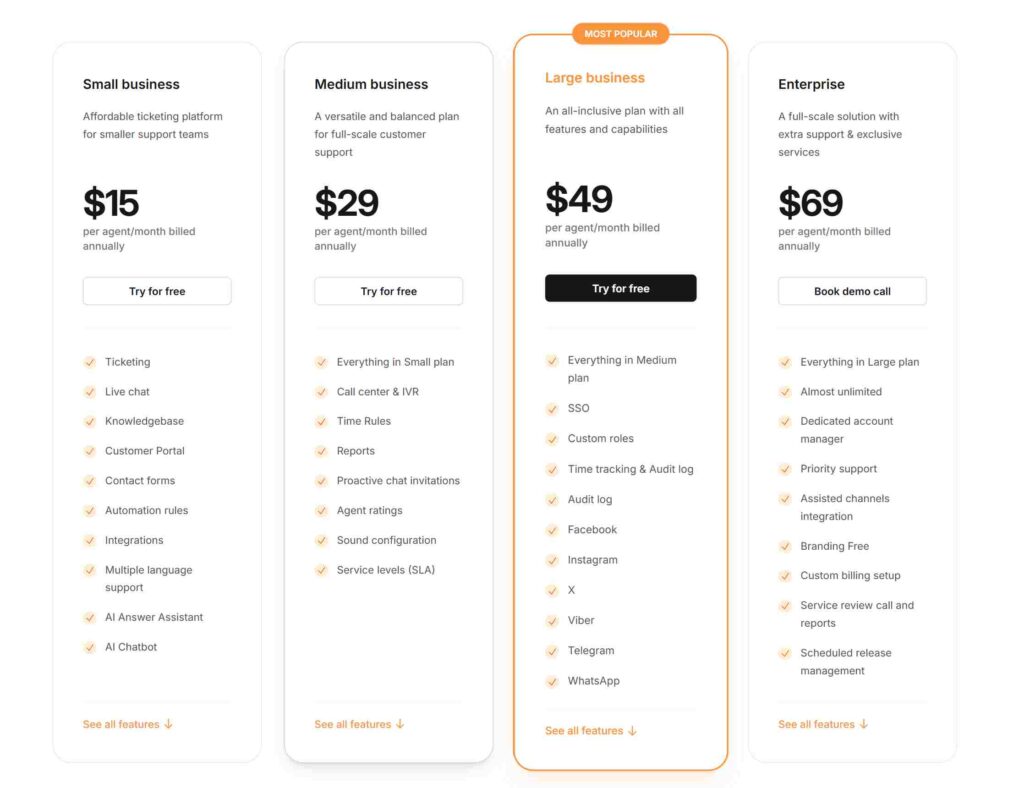
Live chat connects customers directly with human support or sales agents in real time. It’s ideal for situations where nuance, empathy, or on-the-spot decision-making matters. Live chat allows agents to understand customers better and adjust responses to their individual needs, creating a more personal connection.
In my testing, live chat excelled at handling complex questions, resolving billing issues, and guiding customers through high-intent moments like purchases. Customers rated live chat interactions higher for satisfaction, especially when the issue was complicated or emotional.
What I Liked
- Human empathy and understanding: Live agents can read between the lines, show empathy, and build trust in ways AI can’t.
- Handles complex questions: Live chat is perfect for nuanced, emotional, or highly specific customer situations.
- Personalized service: Agents can tailor responses to individual customers, creating a personal connection.
- Prevents cart abandonment: 44% of customers agree that the ability to talk to a customer service rep during purchase is a key advantage of live chat.
- Instant customer feedback: Customers can rate satisfaction immediately after the conversation, giving you real-time performance data.
What I Didn’t Like
- Limited availability: Live chat only works when agents are online and available.
- Higher cost: Requires hiring, training, and managing a support team. Average cost is $2,500+ per month per agent.
- Long wait times: Average queue waiting time is around 4 minutes, and many customers drop out before being served.
- Inconsistent quality: Quality varies between agents. Some are excellent, others less so.
- Limited scalability: Each agent can only handle a limited number of conversations at once.
Best Use Cases for Live Chat
- Complex troubleshooting and technical issues
- Billing disputes and escalations
- High-value sales consultations
- Sensitive customer situations
- VIP or at-risk customers
- Guiding customers through complex purchases
Head-to-Head Comparison
Speed
Winner: AI Chatbots
Chatbots respond instantly — under one second. Live chat averages 35 seconds for first response, with queue waiting time averaging around 4 minutes. For businesses where speed matters most, chatbots win hands down.
Cost
Winner: AI Chatbots
Chatbots cost $0–$30 per month. Live chat costs $2,500+ per month per agent. Organizations using chatbots report savings of 25-40% in administrative expenses.
Quality of Interaction
Winner: Live Chat
Live chat provides real human understanding, empathy, and judgment that chatbots simply can’t replicate. For complex or emotional issues, live chat delivers better value.
Availability
Winner: AI Chatbots
Chatbots work 24/7/365. Live chat is limited to staffed hours only. For businesses with global customers or after-hours needs, chatbots are essential.
Customer Satisfaction
Winner: Tie
Analysis of billions of visits reveals chatbot CSAT essentially matching human CSAT. Despite surveys showing customers prefer humans, chatbots perform equally well on satisfaction metrics when designed properly.
The Hybrid Approach: Best of Both Worlds
The most effective approach in 2026 is to use both — a chatbot as the first line of defense with seamless handoff to live agents when needed. This hybrid model gives you 24/7 coverage without the full cost of live staffing.
Here’s how it works in practice:
- A chatbot greets the customer and handles simple questions — FAQs, order status, password resets, appointment scheduling.
- For complex questions, the chatbot detects when it cannot resolve the issue and transfers the conversation, along with the full chat history, to a live agent.
- Live agents handle the complex cases — billing disputes, technical troubleshooting, sensitive situations.
This approach handles 70-80% of conversations instantly with the chatbot. The remaining 20% go to live agents. You get the speed and scale of AI plus the empathy and judgment of humans.
For more on AI-powered customer support tools for specific business types, check out our guides to best AI chatbots for ecommerce websites and free AI chatbots for small businesses. If you’re deciding between AI and human support, our AI chatbot vs live chat comparison provides additional insights.
Real Limitations I Observed During Testing
AI Chatbots
During my testing, one chatbot confidently gave incorrect information about a product return policy. It sounded authoritative but was completely wrong. I also experienced chatbots that got stuck in loops, asking the same question repeatedly. Training a chatbot properly takes more time than the marketing suggests. A poorly trained chatbot damages customer trust.
Live Chat
I tested live chat during a busy period and waited 6 minutes for a response. The agent was helpful once they arrived, but the wait was frustrating. Another agent was clearly handling multiple conversations and gave generic, copy-paste responses. Quality is inconsistent. The cost of staffing live chat 24/7 is prohibitive for most small businesses.
FAQ
Is AI chatbot better than live chat?
Neither is universally better. AI chatbots are better for speed, cost, and 24/7 availability. Live chat is better for complex issues, empathy, and human judgment. The best approach is a hybrid model that uses both.
Can AI chatbots replace live chat agents?
Not entirely. AI chatbots can handle 70-80% of routine queries like FAQs and order tracking. But they struggle with complex, emotional, or highly specific issues. Human agents are still essential for the remaining 20% of conversations.
How much does a chatbot cost vs live chat?
Chatbots cost $0–$30 per month. Live chat costs $2,500+ per month per agent. Organizations report savings of 25-40% by using chatbots for routine queries.
What percentage of customers prefer chatbots over live chat?
When both options are available simultaneously, 67% of customers choose the chatbot. Yet surveys show 64% of customers say they prefer companies don’t use AI in customer service. Actions speak louder than words.
How do I implement a hybrid chatbot + live chat system?
Start by identifying 3-5 high-intent workflows for the chatbot (e.g., order tracking, returns, password reset). Set up the chatbot to handle simple queries and escalate to live agents when it can’t resolve the issue. Measure first response time, deflection rate, and customer satisfaction, then expand. Tools like Freshchat and LiveAgent support this hybrid approach.
Which businesses should use live chat instead of chatbots?
Businesses with high-value sales, complex products, or sensitive customer situations should prioritize live chat. Examples include financial services, healthcare, B2B software, and luxury goods. For these businesses, the human connection justifies the higher cost.
Final Verdict: Which Should You Choose?
Here’s my honest take after weeks of testing:
Choose AI chatbots if: You have high volume of routine questions, need 24/7 coverage, are on a tight budget, or have global customers in different time zones. A well-trained chatbot will save you time and money. For more options, check out our guide to best open-source chatbot platforms for developers.
Choose live chat if: You handle complex, emotional, or high-value customer situations. You have the budget to staff a support team. You prioritize building relationships over efficiency. Live chat is best for AI chatbots vs live chat scenarios where human judgment is critical.
Use both (hybrid) if: You have the resources and want the best of both worlds. This is the most effective approach for most businesses in 2026. Start with a chatbot for FAQs and simple tasks, then escalate complex cases to live agents. This gives you 24/7 coverage without the full cost of live staffing. For more on training your own AI assistant, see our how to train your own chatbot beginner guide.
For more tech reviews and buying guides, visit QalTech.com.